

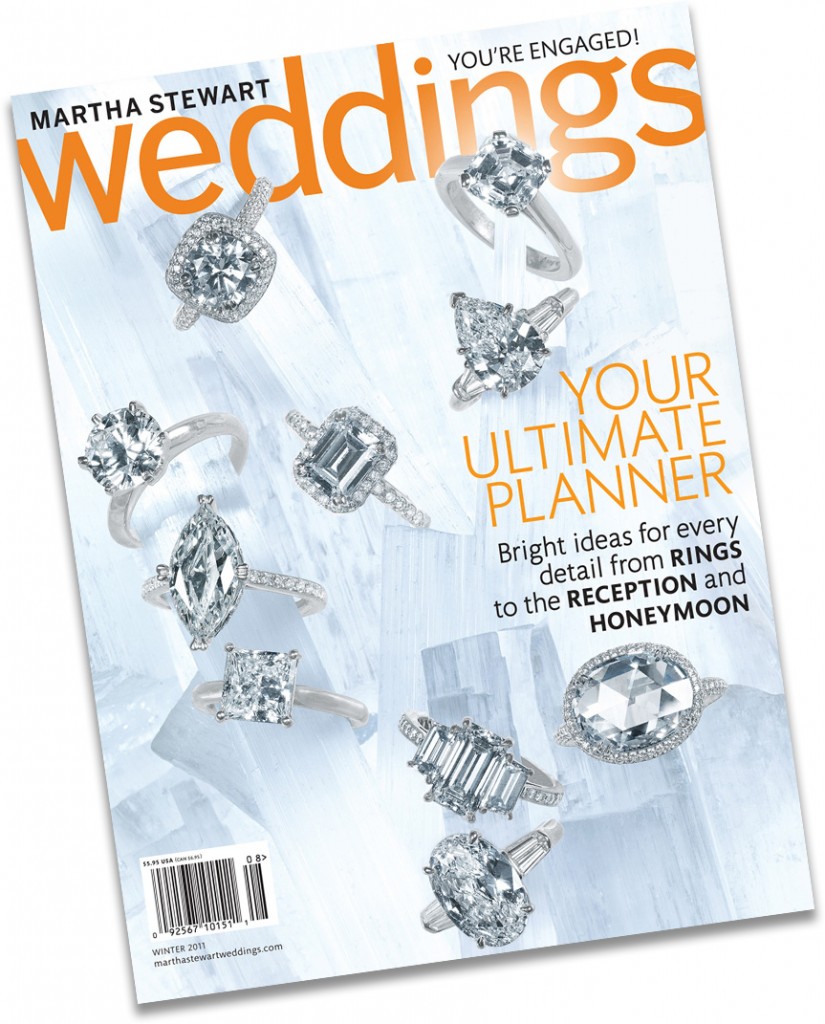
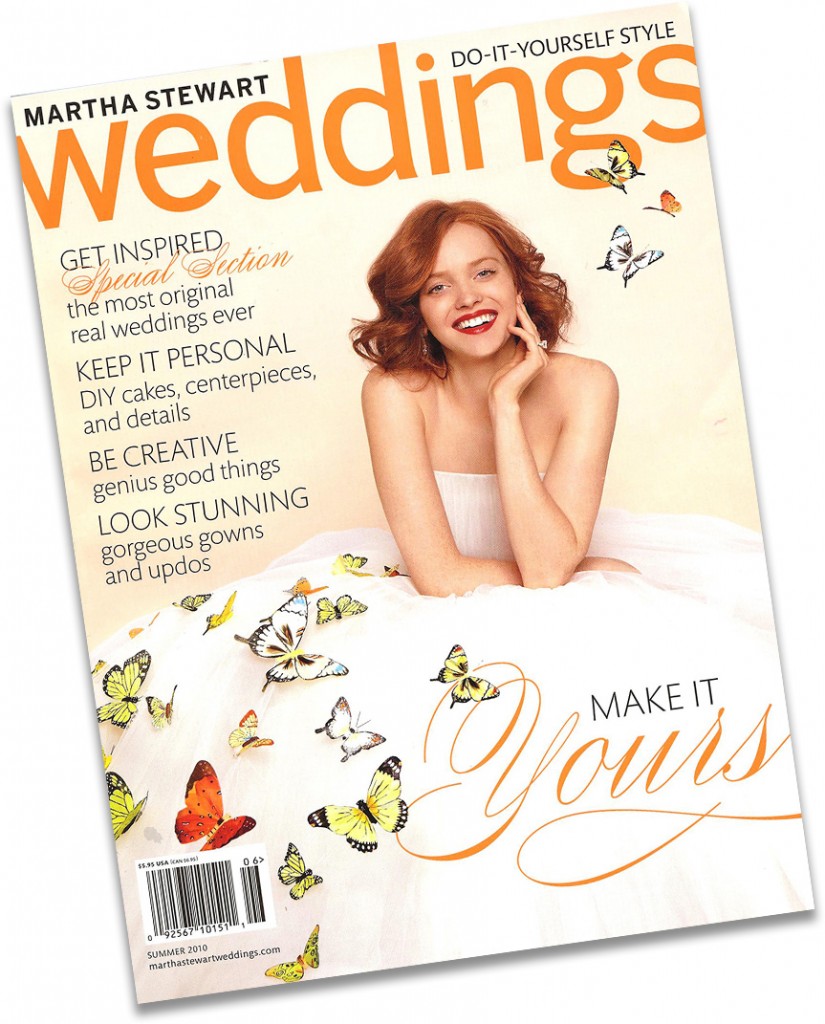
Martha Stewart Weddings Winter 2011 Expert Advice from an Officiant
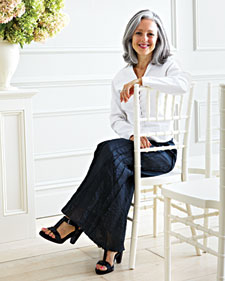
Since becoming an interfaith minister in 2002, the Reverend Jeddah Vailakis has officiated more than 500 weddings. “It’s my true passion in life,” she says. “I take pride in learning about who the bride and groom really are so I can bring their romance to life. It’s important to me that the vows are every bit as well-planned as the party.”
Jeddah Vailakis
New York City
Known for Unique wedding ceremonies that blend spirituality with personality
Where to Find Her Interfaith Wedding Ceremonies
Top Tip When writing your own vows, think about exactly what you’re saying “I do” to. While “you’re my best friend” or “you make me laugh” are nice sentiments, they’re missing the point. Those kinds of statements should be followed by the true message: “I promise to honor you.”
What exactly is an interfaith minister?
I’m ordained to perform weddings. Most couples I work with aren’t interested in having their service in a place of worship, yet they’re looking for a spiritual element that a justice of the peace can’t provide. Others want to blend two religions — say the bride is Catholic and the groom is Jewish — while still others aren’t faith-based at all. Every ceremony is different.
What qualities should a couple look for in a potential officiant?
Make sure the person is genuinely interested in hearing about all the details — the story of how you met, your family dynamics, even what you were wearing when the groom proposed. These are the things she will lean on to set your ceremony apart. It’s also crucial for your officiant to establish intimacy among you and your guests, so observe her word choice and demeanor. And ask yourself how attentive she is to your needs. If you’re nervous, will she calm you before your walk down the aisle? Is she sensitive to the delicate relationship you have with your stepmother?
Any guidance for couples planning on being married by a friend?
Make sure your connection to that person doesn’t become the focus of the service. And he or she needs to be registered with the county clerk — otherwise it’s not legal.
Creating a ceremony from scratch seems daunting. How does the process begin?
It starts with a phone call to discuss the timing and location. You should meet your officiant in person to talk in depth about your expectations for the day. You want to leave that first meeting knowing the order of events and the general direction she will take.
How can couples ensure a personal event?
I give each person a questionnaire to fill out in private. Then I use their separate responses to craft the wording for their ceremony. If your officiant doesn’t offer one, carve out time to write down some of your favorite memories and hopes for your future. Getting your thoughts on paper will help you or your officiant shape your vows.
Guidelines for couples who are planning a nondenominational service?
The standard timeline typically includes a welcome, a reading or two, an address from the minister, a ritual, the declaration of intent, the vows and exchange of rings, the pronouncement, and, of course, the kiss. You can use this as your template, and then fill it in with components that have significance to you and your families. A wedding doesn’t have to be religious to feel meaningful and tailored to you.
What are some unique rituals?
As a symbol of openness and fluidity, stack your open palms over a basin, and have your officiant pour water over them. Or write each other a letter before the wedding. During the vows, place them in a box with a bottle of wine, and then open it on an anniversary.
Do you have pointers for people who feel uncomfortable in the spotlight?
If you think it will put you at ease, consider setting aside some time to spend together on the morning of the wedding. During the ceremony, hold each other’s hands and breathe. And don’t worry about forgetting your lines. That’s why the officiant is there.
See some of Jeddah Vailakis’s favorite wedding ceremony readings and blessings.
Martha Stewart Weddings Summer 2010
You’ve spent hours and hours obsessing over every detail of your reception, and with good reason — it’s going to be the party of a lifetime. But take a breather from all that to think about the other half of your big day: your ceremony. It deserves the same careful consideration as your reception; spend as much time selecting your music, vows, and rituals as you would your cake, flowers, and decor. After all, that special moment when you and your fiance are pronounced husband and wife is the true highlight of your wedding — one that friends and family members will remember long after the cake is cut and the bouquet is tossed.
To help you design your ceremony, we’ve called in the professionals: David Beahm, an event designer based in New York City; the Rev. Judith Johnson, author of “The Wedding Ceremony Planner” (Sourcebooks, Inc., 2005); and the Rev. Jeddah Vailakis, an interfaith minister in New York. With their guidance, you’ll have all your ceremony bases covered — from writing your vows to choosing your readings to mixing in cultural and religious traditions.
Before you get started, sit down with your fiance — and, if their input is important to you, your families — to determine what type of wedding ceremony you’d like to have. Will it celebrate one religion, two religions, or be nondenominational? Will you bring your respective cultures into the mix? Once you make those important decisions, the fun part begins as you determine how best to incorporate your and your fiance’s unique personalities. “The goal is to make it your own, so think of it as an opportunity to get creative,” says Vailakis.
Ultimately, though, “your service should get to the heart of what marriage is all about: two people who are vowing to spend the rest of their lives together in love,” says Johnson.

Your Ceremony, Your Way
Supplement the standard order of events with creative touches that represent you as a couple.
Make an Entrance
A recent YouTube sensation may inspire couples to dance down the aisle, but there are other ways to make the processional your own. Beahm attended a wedding where the bride’s and groom’s guests met at opposite corners of a park, then walked to meet in the middle. Work with your officiant to choreograph an entrance that works for you and your venue.
Change the Seating
Consider the various configurations in which you can seat guests. For an alternative to traditional seating that separates the bride’s side from the groom’s side, arrange chairs in the round or in small groupings. Or, for a very intimate wedding, ask guests to join hands and surround you in a circle as you exchange vows.
Tell Your Tale
Ask your officiant to incorporate a chapter from your love story into his or her address. “It will help guests who may not be privy to the details of your courtship feel more connected to you,” says Vailakis. Share the sweet story of how you met, when you got engaged, or how you chose your wedding venue. Or print a special quote or song lyric on your program.
Express Yourselves
Whether it’s a beloved poem or a passage from your favorite book, your readings should truly celebrate who you are. “Only include them if the literature is meaningful and speaks to your heart,” Beahm says. Otherwise, it could feel like space filler. Should you opt to include one (or two), consider printing the text in the program so guests can follow along.
Explain Traditions
If you will incorporate a cultural or religious tradition such as breaking a glass or jumping a broom, you may want to explain it in your program. Without background information, guests who aren’t aware of the cultural implications may not fully appreciate the meaning.
Include Your Guests
By inviting your loved ones to participate in your big day, you will establish a sense of community among your guests. In turn, you’ll feel that they are supportive of your promises to one another. “The most special ceremonies are those that incorporate everyone in attendance, not just the bride and groom,” Beahm says. As you exchange vows, Johnson suggests inviting those present to recommit to their own vows and the relationships in their lives.
Remember Loved Ones
There are many ways to acknowledge the beloved people in your lives who have passed away, including lighting a candle or ringing a bell in their honor during the ceremony. To ensure that your guests understand the significance, ask your officiant to say a few words about the deceased. If you worry about being overcome with emotion, consider taking a quieter approach by simply writing a few words of remembrance in your program.
From Martha Stewart Weddings, Summer 2010
Read more at Marthastewartweddings.com: Wedding Programs: At Your Service
—

- Photo by Donna Tine
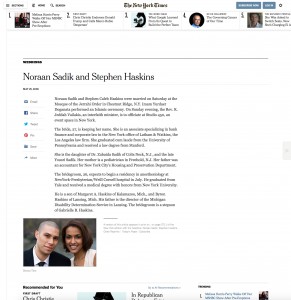
Noraan Sadik and Stephen Caleb Haskins were married on Saturday at the Mosque of the Jerrahi Order in Chestnut Ridge, N.Y. Imam Yurdaer Doganata performed an Islamic ceremony. On Sunday evening, the Rev. K. Jeddah Vailakis, an interfaith minister, is to officiate at Studio 450, an event space in New York.
The bride, 27, is keeping her name. She is an associate specializing in bank finance and corporate law in the New York office of Latham & Watkins, the Los Angeles law firm. She graduated cum laude from the University of Pennsylvania and received a law degree from Stanford.
She is the daughter of Dr. Zubaida Sadik of Colts Neck, N.J., and the late Yousri Sadik. Her mother is a pediatrician in Freehold, N.J. Her father was an accountant for New York City’s Housing and Preservation Department.
The bridegroom, 26, expects to begin a residency in anesthesiology at NewYork-Presbyterian/Weill Cornell hospital in July. He graduated from Yale and received a medical degree with honors from New York University.
He is a son of Margaret A. Haskins of Kalamazoo, Mich., and Byron Haskins of Lansing, Mich. His father is the director of the Michigan Disability Determination Service in Lansing. The bridegroom is a stepson of Gabrielle B. Haskins.